Fiction
The Lion and the Bear
About the Book
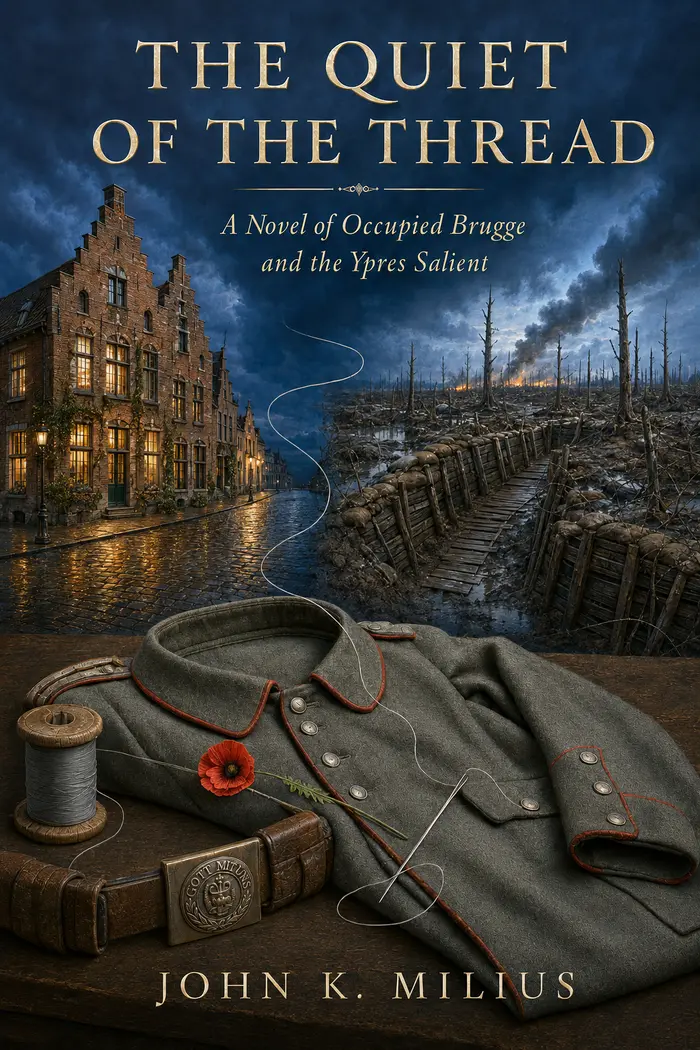
Brugge, 1914. Widower Cyriel Vandenbussche reopens an old pub and restores the lion-and-bear sign first hung above its door in 1776. Then a stranger in buckled shoes takes the window seat. His name is Isidoor Lambrecht. He painted the sign—and he has come back to ask what became of the daughter he left in this house in 1780. As German occupation closes around the city, Cyriel follows a trail of old accounts, withheld letters, and a promise his own family would rather forget. Around him, the pub’s stubborn regulars quarrel, gossip, fall short, and look after one another, while lodging-house keeper Sidonie Vercruysse begins to make room for love in a life already crowded with responsibility. Warm, romantic, and quietly unsettling, The Lion and the Bear is a story of a father’s search, a woman’s right to her own future, and the courage it takes to answer for the past.
STORY COMPLETE · PUBLICATION MAY 1, 2027
Ask about this bookA Taste of the Writing
Read an Excerpt
A selected passage from the book.
The stranger took off his hat before asking whether the house was open, and the courtesy made Cyriel notice the rest of him.
His coat was brown, long through the skirt and carefully brushed. One button did not match its companions. Beneath it he wore a waistcoat which had faded unevenly across the chest and a linen neckcloth tied without ornament. His legs ended, to Cyriel’s surprise, in stockings and shoes with dull metal buckles.
There were men in Brugge who wore old clothes until the clothes became an argument. This man appeared to have come from the beginning of the argument.
“We’re open,” Cyriel said.
The stranger looked around the room. He did not do it as Firmin had done, seeking changes he could resent. His eyes moved from the stove to the rear passage, lingered on the cupboard, and came to rest at the front window.
“You have put the name back.”
“I found the board on Saturday.”
“Yes.”
Cyriel waited for a story about an uncle, a grandfather, some childhood visit. The man remained beside the door with his hat in his hands.
“Sit where you like.”
He chose the window table.
Cyriel went behind the bar. “Beer?”
“If you have it.”
There was no accent he could place. The man’s speech was local, though some of the words sat oddly in the sentence. Cyriel drew a glass and carried it across. The stranger watched him set it down.
“What do I owe?”
Cyriel named the price.
The man put his hand inside his coat and then took it out again, empty. His embarrassment was so ordinary that Cyriel felt foolish for having noticed his stockings.
“It’s all right. Pay before you go.”
“I will not forget.”
“You wouldn’t be the first.”
The man raised his eyes. “No.”
Cyriel returned to his bowl. The broth had begun to cool. He ate a few mouthfuls, aware of the silence, and wondered whether customers expected a publican to provide conversation whenever the room failed to supply it.
“Are you visiting?” he asked.
“I have come back.”
“Family?”
“Yes.”
“Mine have been here a long time. I hadn’t been back properly for years.”
The stranger rested two fingers against the base of his glass. His hands were narrow, the knuckles pronounced. A small scar crossed the web between thumb and forefinger on the left.
“Is there still a yard?”
“There is.”
“And the little house beyond it?”
Cyriel set down his spoon.
The yard ended at a brick wall with an old opening filled in. Behind it lay a narrow property approached from another street. He had seen its roof from his upstairs window but had no reason to connect it with the pub.
“There may have been a way through once.”
“There was a door.”
“You knew the place before Sullivan?”
“I knew another keeper.”
“Most people did.”
The stranger smiled faintly. It was a tired smile, and Cyriel found himself wanting to say something less empty.
“My name’s Cyriel. Vandenbussche.”
The man looked toward the bar. He had seen the name on the paper concerning the license, perhaps, or over the entry in the passage. It was not remarkable that he should know it. Yet the pause lasted long enough for Cyriel to hear the stove settle.
“Vandenbussche,” the stranger repeated.
“It isn’t an unusual name.”
“No.”
He rose then and offered his hand.
“Isidoor Lambrecht.”
Meet the Author
John K. Milius
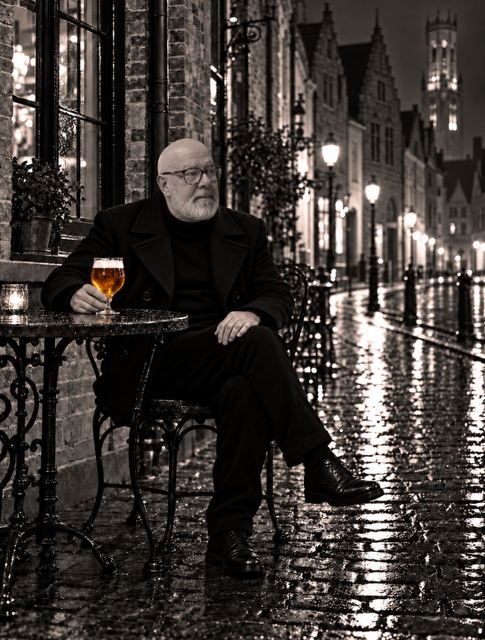
John K. Milius brings four decades of sales, leadership, customer relationships, and hard-earned commercial judgment to the page. His fiction turns that same eye toward Brugge—a city of water, memory, history, and stories waiting beneath the stones.
Continue Exploring